 It had gone on so long she couldn’t remember a time that wasn’t like this. She lived in constant fear. She wasn’t just cranky and out-of-sorts; she was terrified. Her life wasn’t just messy and disordered; it was perilous, precarious, seriously even savagely so. It was physically and spiritually draining, like being whipped every day.
Many in her situation might have given up, given in, curled up, and died. But not her. She was determined to stay alive. She was, after all, a daughter of Eve, created by God to join her husband as partners with God in conceiving, bearing, and giving birth to other human beings. She had had those children and now she had to look after them, to raise them, to ensure their survival.
But . . . she was going to die. She was convinced of that. If she continued to live in those circumstances she would die. There is simply no doubt about it.
 Our Old Testament lesson this morning is a very small bit of the Book of Job, that really sort odd bit of Biblical literature that tells the story of a wager between God and Satan. Some scholars believe that it may find its origins in an earlier Babylonian work known as the Poem of the Righteous Sufferer, that the Jews in Exile became familiar with the older Babylonian story and adapted it to their own theology.
 Our kids this week have been “Shipwrecked,” but they’ve also been “rescued by Jesus.”
 For recreational reading these days, I’m into a novel entitled Winter of the Gods.
 The theme for today’s lessons is clear . . . we are almost “hit upside head” with the concept of Sabbath. Our reading from Deuteronomy is the law establishing the mandatory day of rest:
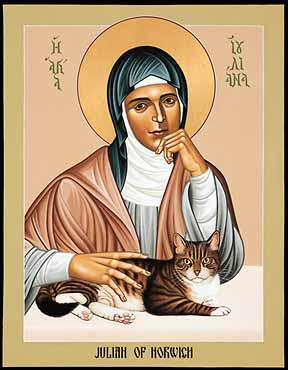 Today we are welcoming Reed C_____ F_____ into the Household of God through the Sacrament of Holy Baptism. We are also commemorating Dame Julian of Norwich, one of the medieval saints of English Christianity. Twenty-eight years ago I was ordained a deacon on Julian’s feast day which is actually on Tuesday, May 8. So the lessons we heard this morning, and the second of the two collect I offered after the Gloria in Excelsis, were from the propers for Dame Julian’s celebration. But I would like to read you also the brief Gospel lesson appointed for the Sixth Sunday of Easter, which is also from John’s Gospel
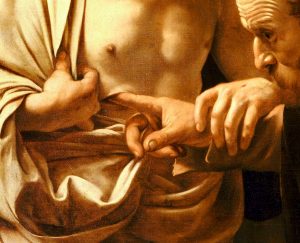 Every year, for as long as any of us can remember, on the Second Sunday of Easter the church has told the story of Thomas, Thomas the Doubter, “Doubting Thomas” who wouldn’t believe that Jesus had risen, the poster child for those who are uncertain. But, believe me, Thomas gets a bad rap! He was no worse a doubter or disbeliever than any of the others, including Peter!
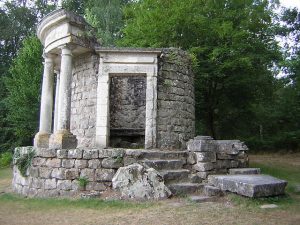 Before coming to Ohio, my wife and I lived in the Kansas City metroplex. For reasons that still remain mysterious, I was somehow added to the mailing list for the newspaper of the Roman Catholic Archdiocese of Kansas City, Kansas, which is called The Leaven. When we moved here, I expected that that would stop, but somehow they got my change of address, so I still get The Leaven. I suppose I could have asked to be taken off, but I enjoy reading some of the articles, especially a column written by the paper’s editor-in-chief Father Mark Goldasich. Fr. Goldasich often relates stories of people from around the archdiocese; some are funny, some are touching, and some, like this recently offered story, bring tears to your eyes:
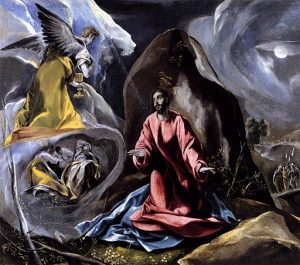 Across the Kidron valley from Jerusalem, at the foot of the Mount of Olives, is a small grove of olive trees. In the midst of it is a church called “The Church of All Nations” and in the center of that church, surrounded by a low wrought iron fence sculpted to resemble brambles and thorns, is a large, rough, flat rock. It is called “the stone of agony” and tradition tells us it is the place where Jesus prayed on the night before he died.
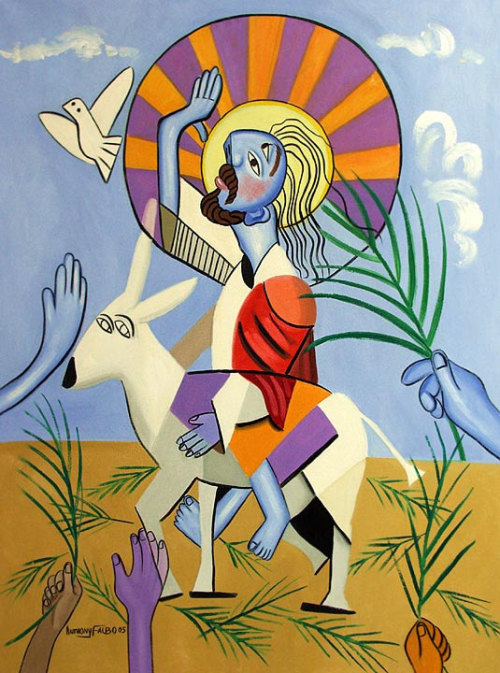 Today we are commemorating Jesus’ entry into Jerusalem at the beginning of the week that would culminate in his death on the cross of Calvary. Somewhat contrary to common sense, this has come to be called the “triumphal entry.” I don’t know who first applied this term to Jesus making his way from Bethany and Bethphage, through the Kidron Valley, also known as the valley of Jehosophat or the valley of decision, into the holy city. I’ve often thought that whoever it was must surely have been a master of irony, or perhaps of sarcasm, for the procession was anything but a triumph!

