This sermon was first preached on Easter Sunday, 2001, at St. Francis of Assisi in the Pines Episcopal Church, Stilwell, Kansas, where I was rector from July 1993 to June 2003. I had thought it lost when that parish abandoned its internet domain after I left that position. However, at the urging of a friend, I searched for it on the Internet Archive’s “wayback machine,” and was surprised to find it. I have updated some of the references and corrected some mistakes to publish it here. I have always thought it a pretty good sermon, and I guess others have thought so, too: in the course of researching sources to update the footnotes, I found that a rather large chunk of it had been reproduced in full, without attribution, as the pastor’s 2019 Easter letter in the newsletter of a Roman Catholic parish in Scotland.[A] (As my fellow Anglican cleric Charles Caleb Cotton wrote in 1824 – and Oscar Wilde later quoted and expanded – “Imitation is the sincerest [form] of flattery.”[B])
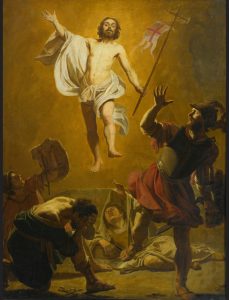 Easter is a joke. Amen.
(The Preacher steps out of the pulpit, perhaps even returns to his chair, then returns to the pulpit.)
OK … I guess I should explain that. What is a “joke”? Princeton University’s WordNet Dictionary says, in one of its definitions, that a joke is an “activity characterized by good humor.”[1] Can you think of a better way to characterize the resurrection of Jesus than as an “activity characterized by good humor”? The Resurrection of Jesus of Nazareth was God’s activity of the highest and best humor!
I wrote in our newsletter, The Canticle, that the Sunday we call “Easter” is really not a separate feast day; it is the third part of a three-day celebration that begins at sundown on the previous Thursday, the day we call “Maundy.” This three-day celebration is called by an ancient Latin name, “the Triduum.” The Triduum is a single celebration in three acts. We have arrived at Act Three in the drama of redemption.
Continue reading
 In today’s Gospel, we are again in that long discourse from John’s Gospel which Bible scholars call “The High Priestly Prayer.” We’ve heard various parts of this prayer throughout the Easter Season. In this part of the prayer, Jesus asks of the Father, on behalf of the disciples, “Sanctify them in the truth; your word is truth. As you have sent me into the world, so I have sent them into the world. And for their sakes I sanctify myself, so that they also may be sanctified in truth.”[1]
 Monday being “Memorial Day,” this weekend, in the traditions of our country, we are remembering and celebrating those who have fought on behalf of, and given their lives for, the United States. In the traditions of the church today, we are celebrating something called “Rogation Sunday,” on which we give thanks for the abundance of the earth and ask God’s blessings upon agricultural pursuits, upon the fields and the herds. I’d like to read you a story about giving thanks for abundance. It is from the Paul Harvey radio program.
 A few years ago, at my former parish, we had a Sunday school presentation in which each of the kids was to recite a verse of Scripture. On little guy came up and just stood there, shuffling his feet and looking very uncomfortable; he just couldn’t remember his line… His mother was in the front row to prompt him. She gestured and formed the words silently with her lips, but it did not help. Her son’s memory was blank. Finally, she leaned forward and whispered the cue, “I am the light of the world.” The child beamed and with great feeling and a loud clear voice said, “My mother is the light of the world.”
 Anthelme Brillat-Savarin , an 18th century French politician once said, “Tell me what kind of food you eat, and I will tell you what you what kind of man are.”
 In today’s Gospel lesson we heard, as we always hear on the Second Sunday of Easter Season, the story of “doubting Thomas.” What is striking about the Thomas’s demand … “unless I see” … is that our Lord accepts and encourages it … “Reach out your hand.”
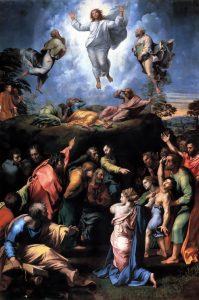 Today, as I write this, is Trinity Sunday 2020, but my imagination this morning is not caught up by the Lectionary gospel lesson of the day, the last mountain-top experience of the Eleven when, just before his Ascension, Jesus gives them the Great Commission.
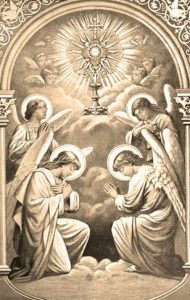 With churches suspending public worship out of concern for the contagion of Covid-19, the noval coronavirus, we Episcopalians (and many others) are prevented from receiving Holy Communion. An ancient practice of the Church in such circumstances, for there have always been those who, for whatever reason, are unable to take the Sacrament, is to make an act of “spiritual communion.”
  Today marks the beginning of the season we call “Lent,” an old English word which refers to the springtime lengthening of the days. What is this season all about, these forty days (not counting Sundays) during which we are to be, in some way, doing what a hymn attributed to St. Gregory the Great says: “Keep[ing] vigil with our heavenly lord in his temptation and his fast?”
 A Buddhist tells this story:

