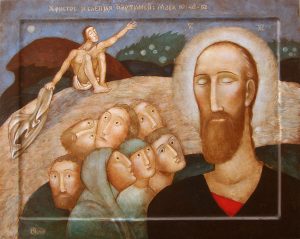
 Two weeks ago, Mark told us the story of the rich man who came to Jesus asking “What must I do to inherit eternal life?”[1] Today, in contrast, we have the story of Blind Bartimaeus.
The rich man came asking what he could do to earn salvation. Jesus gave him what turned out to be an impossible task, give up his wealth for the benefit of the poor, then come and follow Jesus. Bartimaeus, on the other hand, sits at the side of the road and simply calls out to Jesus asking for mercy. Though the crowd tries to silence him, Jesus hears him and asks what he wants. “To see again” is his reply and this request is immediately granted. “Go,” says Jesus, “your faith has made you whole.” The rich man is told to give everything up and then follow, but he goes away. Bartimaeus, in a sense, is given everything when his vision is restored and told to go away, but he follows.
 Christology is one of those odd words of the Christian tradition that one doesn’t hear much in church but which one hears a lot in academic circles. Christology is defined as “the field of study within Christian theology which is primarily concerned with the ontology and person of Jesus as recorded in the canonical Gospels and the epistles of the New Testament.”
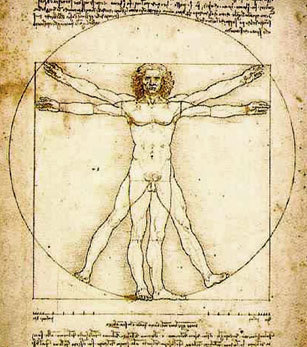 Our gradual this morning asks a question of God about human existence:
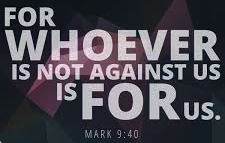 Today the Lectionary gives us what, at first glance, are two stories about leadership, but what they really are are stories of people trying to protect God (or God’s appointed leader) in inappropriate ways
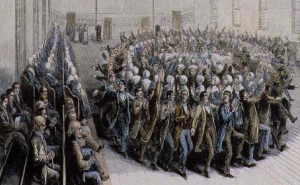 The collect for today from The Book of Common Prayer:
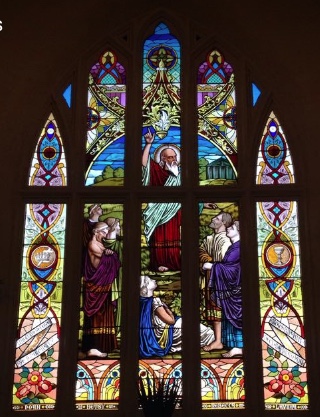 Fifteen years ago when I came to Medina for the first time in my life to meet the people of St. Paul’s Parish and, with them, make the mutual determination whether our life-paths were to converge, Earl and Hildegarde picked Evie and me up at the Cleveland airport. They first took us to Yours Truly Restaurant where we had a bite of lunch and then they brought us here, so that we could see the church.
 Last week we began our parish’s annual fund campaign with the theme “Transforming Generosity.” You should have received your pledge card for 2019 together with a letter about the nature of stewardship and generosity. There was an article in the newsletter similar to that letter, and early in the week you received an email (if you receive email) which is repeated on an insert in your bulletin this morning. Your parish leadership team has asked and will continue to encourage you to do two things that may seem contradictory: first, to make your financial commitment for 2019 earlier than usual, and second, to take your time in doing so. Our hope is that you will submit your estimates of giving on or before the first Sunday in November, but that you will give real prayerful and careful consideration to how your financial support of your church reflects your relationship with God. Stewardship, as that letter said, is not a matter of fund raising; stewardship is a matter of spiritual health. The “Transforming Generosity” theme hopes to inspire you to be a faithful steward and so to give as an expression of your relationship with God.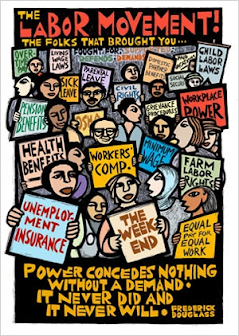
 Five weeks ago we began our month long journey through the world of bread with what Presbyterian scholar Choon-Leon Seow called the “remarkably mundane” story of food for the hungry, the feeding of the 5,000.
 Children, as those of us who have had or who have been children know, grow in their ability to communicate. Vocabularies grow. Grammars develop. They move from simple one- or two-syllable concepts – such as “Mama” or “Dada” or “NO!” – to more complex ideas.

