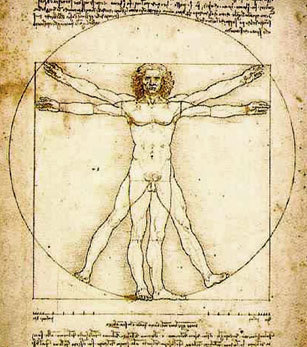
 Our gradual this morning asks a question of God about human existence:
What is man that you should be mindful of him?
the son of man that you should seek him out?[1]
Whenever I read this psalm, my mind immediately skips to lines from William Shakespeare, to words spoken by the prince of Denmark in the play Hamlet:
What a piece of work is a man! How noble in reason, how infinite in faculty! In form and moving how express and admirable! In action how like an Angel! In apprehension how like a god! The beauty of the world! The paragon of animals![2]
I have always been certain that Shakespeare was riffing on Psalm 8.
The prayer book version of the Psalm uses the word “man” in the generic sense asking the question about all of humankind, then literally translates the Hebrew ben adam as “son of man” recalling to us a term Jesus often applied to himself. While that may make a certain amount of liturgical sense, it distorts the importance of the Psalm. As translated in the New Revised Version of scripture, Psalm 8 asks, “What are human beings that you are mindful of them, mortals that you care for them?” This is a little closer to the initial meaning of the verse, but the original Hebrew is not pluralized. This translation loses the awe and wonder of a singular individual gazing up at the night sky and overwhelmed by the presence of divinity.
 Today the Lectionary gives us what, at first glance, are two stories about leadership, but what they really are are stories of people trying to protect God (or God’s appointed leader) in inappropriate ways
 The collect for today from The Book of Common Prayer:
 Fifteen years ago when I came to Medina for the first time in my life to meet the people of St. Paul’s Parish and, with them, make the mutual determination whether our life-paths were to converge, Earl and Hildegarde picked Evie and me up at the Cleveland airport. They first took us to Yours Truly Restaurant where we had a bite of lunch and then they brought us here, so that we could see the church.
 Last week we began our parish’s annual fund campaign with the theme “Transforming Generosity.” You should have received your pledge card for 2019 together with a letter about the nature of stewardship and generosity. There was an article in the newsletter similar to that letter, and early in the week you received an email (if you receive email) which is repeated on an insert in your bulletin this morning. Your parish leadership team has asked and will continue to encourage you to do two things that may seem contradictory: first, to make your financial commitment for 2019 earlier than usual, and second, to take your time in doing so. Our hope is that you will submit your estimates of giving on or before the first Sunday in November, but that you will give real prayerful and careful consideration to how your financial support of your church reflects your relationship with God. Stewardship, as that letter said, is not a matter of fund raising; stewardship is a matter of spiritual health. The “Transforming Generosity” theme hopes to inspire you to be a faithful steward and so to give as an expression of your relationship with God.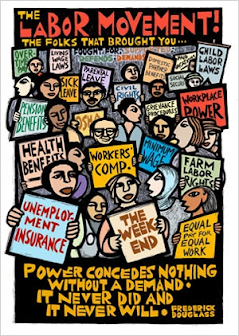
 In 2014, Evie and I were privileged to join a group of other pilgrims from Ohio and Michigan and spend not quite three weeks in Palestine and Israel visiting many of the sites we hear about in the Bible, especially the Christian holy places of the Gospel stories. One of those was a hilly place overlooking the Sea of Galilee called Tabgha. Until 1948, when the Israelis uprooted its residents, a village had been there for centuries; now it is simply an agricultural area and a place of religious pilgrimage.
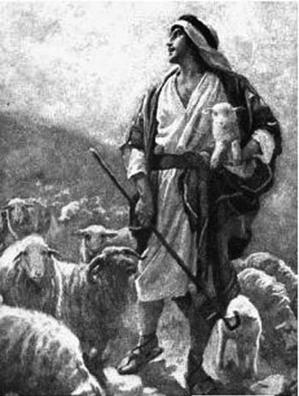 Most of the Bible texts from the Revised Common Lectionary this week present us with the well-worn and comfortable Biblical image of sheep and shepherds. Jeremiah rails against the shepherds of Israel “who destroy and scatter the sheep of [the Lord’s] pasture,”
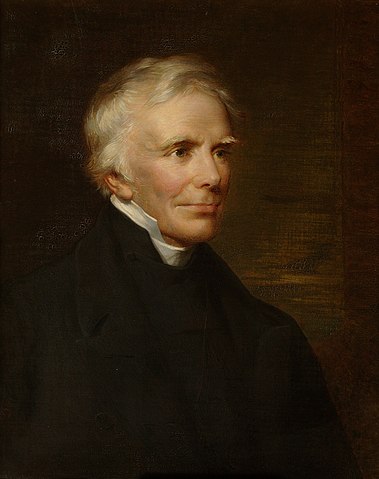 Yesterday, July 14, was the 185th anniversary of the preaching a sermon which is said to have been the beginning of the Catholic revival in the Church of England. The sermon was preached at St. Mary’s Church Oxford by the Rev. John Keble, Provost of Oriel College and Professor of Poetry at Oxford. The sermon marked the opening of the Assize Court, the summer term of the English High Court of Justice. The Assize sermon normally would have addressed matters of law and religion, but in the summer of 1833 the Parliament of the United Kingdom was debating whether to abolish (or in the language of the time “suppress”) some dioceses of the Anglican Church of Ireland which, at the time, was united with the Church of England. It was an entirely financial issue in the eyes of Parliament, but Keble and several of his friends believed this to be an encroachment of the secular establishment upon the religious and an altogether wrong thing, and so it was this portending legislation that Keble addressed in his homily, which he titled National Apostasy. He began with these words:
 In today’s gospel lesson from the sixth chapter of Mark, Jesus has come home to Nazareth immediately after last week’s two stories of healing. Apparently he is there for at least a few days and when the Sabbath comes he does as he has done elsewhere: he goes to the synagogue. In Luke’s version of this story, Jesus is given a scroll from the prophet Isaiah and reads from it:

