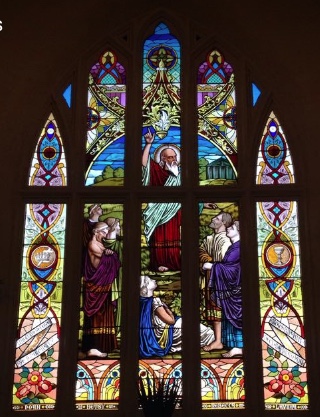
 Fifteen years ago when I came to Medina for the first time in my life to meet the people of St. Paul’s Parish and, with them, make the mutual determination whether our life-paths were to converge, Earl and Hildegarde picked Evie and me up at the Cleveland airport. They first took us to Yours Truly Restaurant where we had a bite of lunch and then they brought us here, so that we could see the church.
I walked into this worship space and, quite forgetting that the patron saint of the parish is Paul the Apostle, I looked up at the altar window and I thought, “Why do they have a stained-glass window of Socrates?” As some of you may know, there is a bust of Socrates by the Greek sculptor Lysippus in the Louvre museum in Paris that the man in that window looks a good deal like; I suspect the 19th Century artisan who made that window took it as his inspiration. Of course, it’s not Socrates in the window; it’s Paul holding forth amongst the philosophers of Athens at the Hill of Mars, a story told by Luke in the 17th chapter of the Book of Acts.
Nonetheless, I thought of Socrates and our window this week as I contemplated this Sunday’s lessons, two of which (the prophecy of Isaiah and the Letter of James) discuss the ministry of teaching and one of which tells the story of Jesus’ instructing the Twelve.
 Children, as those of us who have had or who have been children know, grow in their ability to communicate. Vocabularies grow. Grammars develop. They move from simple one- or two-syllable concepts – such as “Mama” or “Dada” or “NO!” – to more complex ideas.
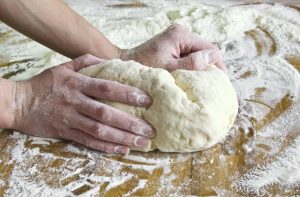
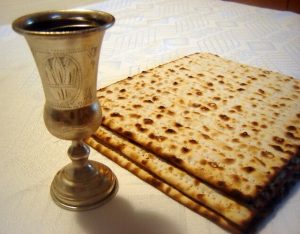 At the end of our gospel lesson this morning, Jesus said to the crowd, “It is my Father who gives you the true bread from heaven. For the bread of God is that which comes down from heaven and gives life to the world.” They said to him, “Sir, give us this bread always.” Jesus answered, “I am the bread of life. Whoever comes to me will never be hungry, and whoever believes in me will never be thirsty.”
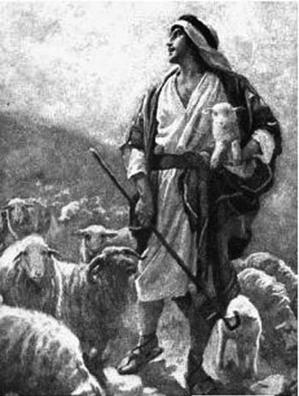 Most of the Bible texts from the Revised Common Lectionary this week present us with the well-worn and comfortable Biblical image of sheep and shepherds. Jeremiah rails against the shepherds of Israel “who destroy and scatter the sheep of [the Lord’s] pasture,”
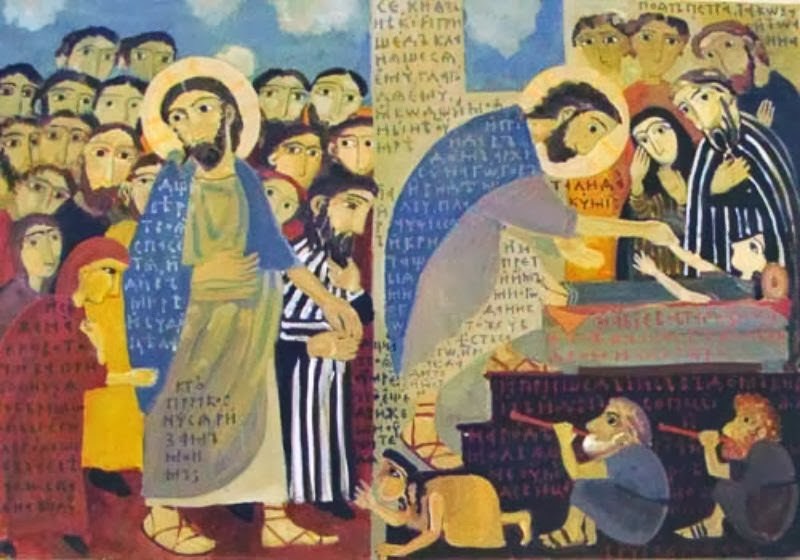 It had gone on so long she couldn’t remember a time that wasn’t like this. She lived in constant fear. She wasn’t just cranky and out-of-sorts; she was terrified. Her life wasn’t just messy and disordered; it was perilous, precarious, seriously even savagely so. It was physically and spiritually draining, like being whipped every day.
 Our kids this week have been “Shipwrecked,” but they’ve also been “rescued by Jesus.”
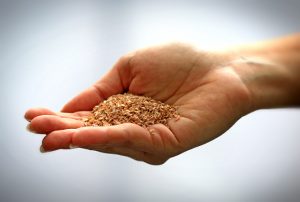 The theme for today’s lessons is clear . . . we are almost “hit upside head” with the concept of Sabbath. Our reading from Deuteronomy is the law establishing the mandatory day of rest:
 Some of you may have heard of Brooks’s law, which has to do with the time it takes to complete a software project. It’s similar to the general law of diminishing returns in economics. Professor Fred Brooks of the University of North Carolina first proposed the law in 1975; it holds that “adding manpower to a late software project makes it later.”
 In 2011 a young man in New York City named Gabriel went to a party. While there, he drank some of the alcoholic punch being served. Unknown to the young man, the punch had been spiked with a drug called Gamma-Hydroxybutyric Acid, commonly called GHB. Prescribed as Xyrem and also called by a variety of “street names,” it is known as a “date rape” or rave drug. It comes as a liquid or as a white powder that is dissolved in water, juice, or alcohol. In most people it produces euphoria, drowsiness, decreased anxiety, excited behavior, and occasionally hallucinations. For Gabriel, however, who suffered from medication-controlled epilepsy, it caused a seizure. Apparently interacting with his regularly prescribed medication, the GHB he had unknowingly consumed caused a fatal convulsion.

